
Walkways, side-yard paths, and safer access
Sidewalk and Walkway Concrete in DFW
A concrete walkway is usually about daily use: getting from the driveway to a gate, carrying bins without crossing mud, connecting a patio, or making a side yard safer after rain. Width, slope, turns, and transitions matter more than decorative language.
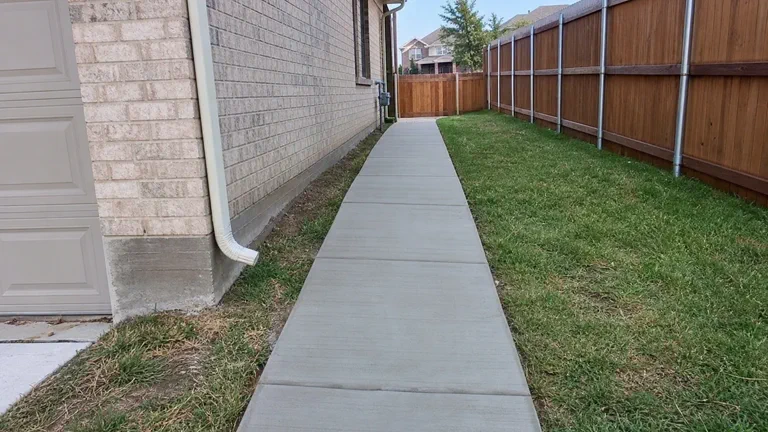
Walkway layout should follow the real footpath
Many side-yard paths start as worn grass. The practical question is whether the new concrete should be a straight utility walk, a wider route for trash bins and tools, or a cleaner connection between driveway, gate, patio, and backyard.
Transitions are where walkway projects succeed or fail. Door thresholds, existing patios, fence gates, driveway edges, and drainage swales all need attention so the path does not create a trip point or send water somewhere worse.
If the goal is safer access for older family members, kids, guests, or service work, mention that. The conversation can then focus on width, grade, turns, and the surface finish instead of treating the project as generic flatwork.
- Decide whether the path is for people only or also for bins, tools, carts, and equipment.
- Check gate swing, hose bibs, utility boxes, AC units, and tight fence-side clearances.
- Avoid creating steps, lips, or low spots at patios and doorways.
- Use a finish that fits ordinary walking conditions after rain.
Concrete planning standard
A path that fixes the muddy route
A walkway earns its keep when it replaces the muddy or unsafe path people already take.
The route should handle gates, thresholds, bins, wet areas, and daily foot traffic without adding awkward lips at each end.
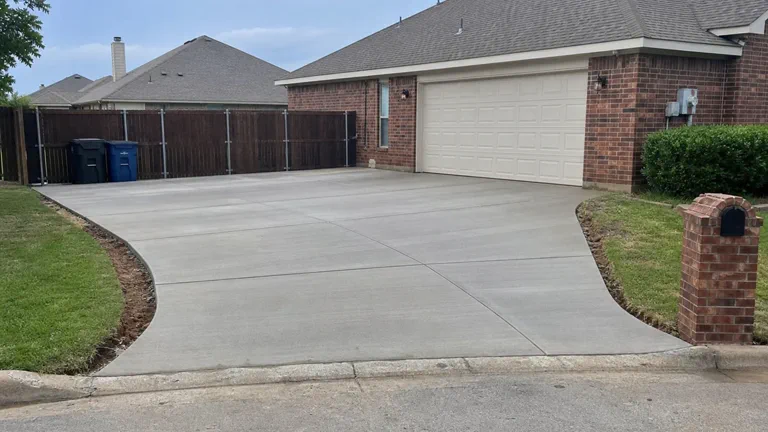
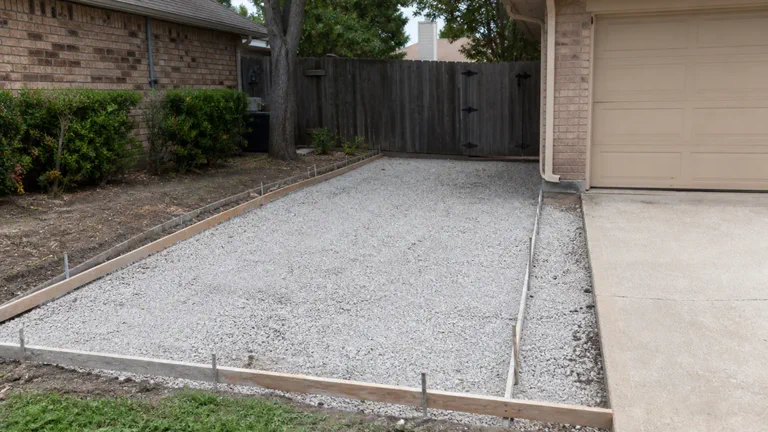
Sidewalk and walkway questions
How wide should a side-yard walkway be?
The width depends on daily use. A simple walking path may be narrower than a route used for trash bins, wheelbarrows, strollers, or moving items to the backyard. Door swings, fence clearance, and AC equipment can also affect the best width.
What causes walkway trip points?
Trip points often come from soil movement, tree roots, poor drainage, unsupported edges, or a transition that was not planned well. Joint layout, base prep, and water management help reduce future movement.
How long before a new walkway can be used?
Light foot traffic is usually possible earlier than vehicle traffic, but the surface still needs protection while it cures. Weather, thickness, and finish can affect the timeline, especially if the walkway is part of a larger pour.
Where should the walkway connect?
Good connection points are usually the driveway, garage door, side gate, patio, shed, pool equipment, or backyard activity area. The path should make daily movement easier without trapping water against the house or fence.
What maintenance does a concrete walkway need?
Keep soil from burying the edges, control sprinkler overspray, clean leaves or mud that hold moisture, and watch for low spots after storms. If nearby roots or drainage are active problems, those should be part of the planning conversation.
Start with the project
Lay Out the Walkway
Use the form to describe the property, city, approximate size, and what you want the finished concrete to solve. A conversation can then focus on useful next steps instead of starting from scratch.