Cost factors without vague pricing shortcuts
DFW Driveway Extension Cost Guide
Driveway extension cost depends on more than a square-foot number. Size matters, but so do removal, base prep, thickness, access, drainage, finish, traffic load, haul-off, and whether the work touches a curb, alley, garage approach, or backyard route.
What changes the scope of a DFW driveway extension
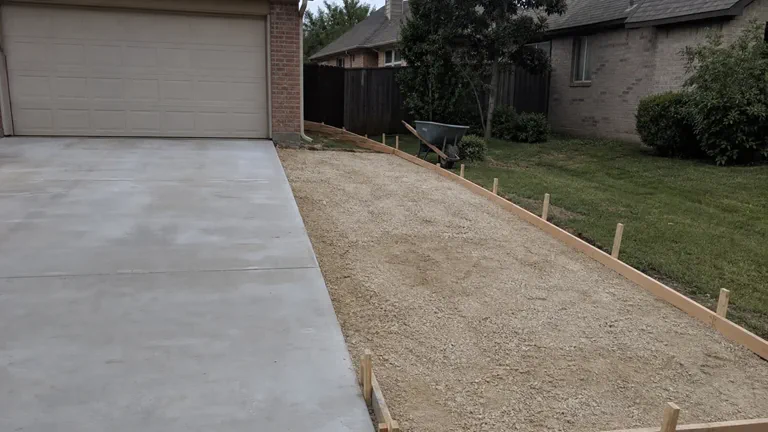
A small clean strip beside a driveway is not the same project as a pad that requires demolition, curb work, thickened edges, a long side-yard route, or difficult access. That is why an honest cost conversation starts with scope categories rather than a fake flat number.
Photos help separate simple from complicated. A wide-open front driveway with clear grass beside it is easier to understand than a fenced side yard with sprinklers, utilities, slope, and a trailer that needs backing room. Both may be good projects, but they should not be priced as if they are identical.
Finish expectations also matter. Matching older concrete exactly is not realistic, but the project can still be planned for a clean transition, deliberate control joints, and a surface that fits the home.
- Square footage and thickness needed for the intended vehicle load.
- Demolition, haul-off, base correction, and access limitations.
- Drainage, slope, downspouts, curb approach, alley, or garage tie-in issues.
- Finish, joint layout, edge detail, and expectations next to older concrete.
Concrete planning standard
Scope clarity before price talk
Cost changes when the project stops being a clean add-on and starts involving demolition, base correction, heavy vehicle use, or tricky access.
The most useful first answer is not a fake universal price. It is a clear separation between simple widening, replacement-heavy work, and access/drainage-complicated work.
Driveway extension cost questions
Why not give one square-foot price?
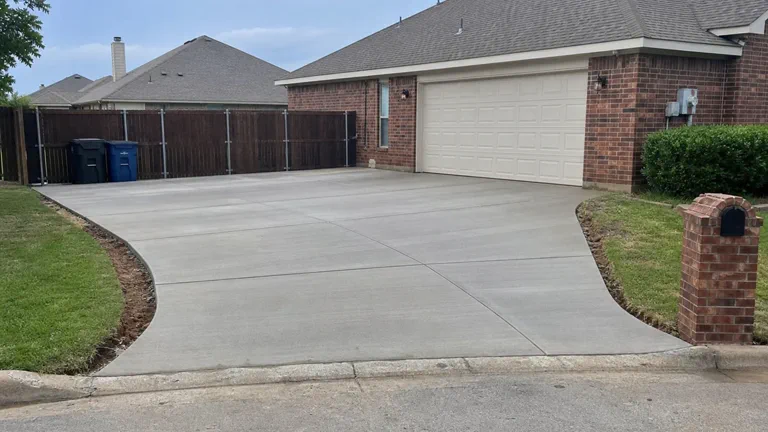
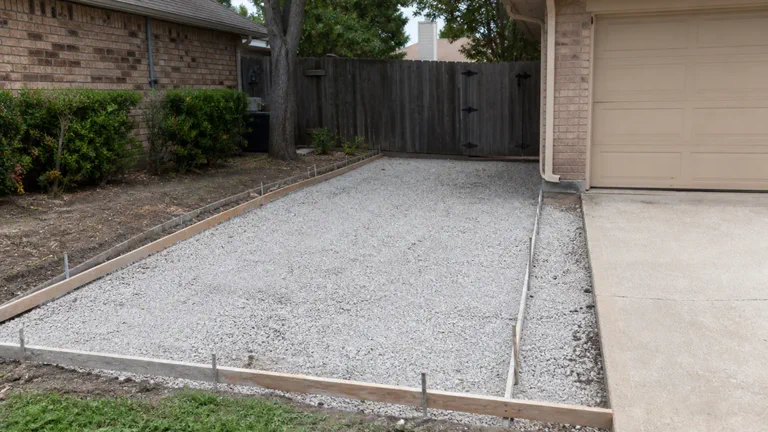
Square footage matters, but it is not the whole project. Demo, haul-off, base prep, thickness, reinforcement, access, finish, drainage, forms, and tie-ins can all change the price. A small complicated pour can cost more per square foot than a larger simple one.
What makes a driveway extension more expensive?
Costs usually rise when the project needs demolition, thicker concrete, more base correction, difficult access, drainage work, curb or sidewalk tie-ins, long wheelbarrow runs, or careful matching beside older concrete.
Does curing time affect the project cost?
Curing time usually affects scheduling and use more than the initial estimate. The important part is understanding when the new surface can handle foot traffic, cars, trailers, or heavier loads so the project is not rushed after installation.
Can existing concrete be repaired instead of replaced?
Sometimes. If the slab is mostly sound, the conversation may focus on an addition, transition, cleaning, joint work, or a targeted replacement section. If the slab is badly cracked, sunken, thin, or draining poorly, replacement may be the more realistic option.
What information helps narrow the range?
Helpful details include rough dimensions, city, photos, vehicle type, access route, slope, drainage issues, whether demolition is needed, and what the finished surface should make easier.
Start with the project
Talk Through Scope
Use the form to describe the property, city, approximate size, and what you want the finished concrete to solve. A conversation can then focus on useful next steps instead of starting from scratch.