Concrete pads for RVs, boats, and trailers
RV and Boat Parking Pads in DFW
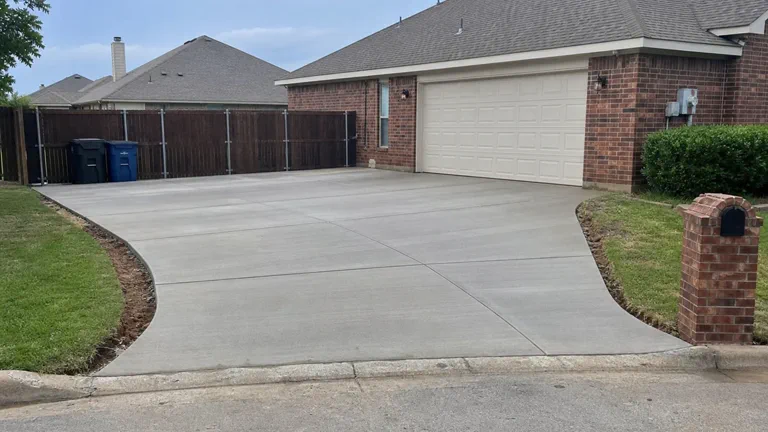
RV and boat pads are less forgiving than a small passenger-car strip. Length, turning angle, gate width, tire load, storage rules, and drainage decide whether the space is convenient or becomes a hard-to-use slab beside the house.
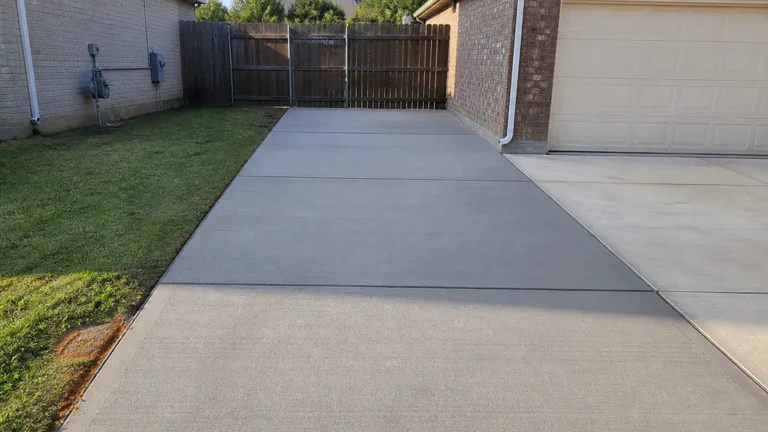
Storage pads need more than a rectangle
The first check is access. A pad behind a fence may need a gate opening, a straight approach, and room to swing without tearing up the lawn. A pad beside the driveway may need enough width to open doors, load gear, or avoid blocking everyday vehicles.
North Texas rain can turn side yards into channels. If the pad sits where water already moves, the plan should address slope and discharge before the surface is poured. Otherwise the vehicle may stay clean while the yard or neighbor side takes the problem.
HOA and city rules matter for visible RV, boat, or trailer storage. This site does not guess those rules. If you already have written rules, mention them so the conversation can focus on the concrete layout that fits the allowed use.
- Confirm vehicle length, tongue or hitch space, and how the trailer backs into the area.
- Check fence, gate, meter, AC, and utility clearances along the approach.
- Decide whether the pad is for storage only or also for loading, washing, and maintenance.
- Mention HOA or city storage limits before work is scoped.
Concrete planning standard
A pad the vehicle can actually use
A storage pad succeeds when the vehicle can actually get to it, sit level enough for the intended use, and avoid creating a water problem beside the house.
Gate width, backing angle, tire path, side-yard slope, and visible storage rules belong in the first discussion.
RV and boat parking pad questions
What makes an RV pad different from extra car parking?
Load and access matter more. RVs, boats, and trailers can require more attention to slab thickness, base prep, turning path, gate clearance, drainage, and whether the pad will carry weight in the same place for long periods.
Should the pad sit behind a gate?
It can, but gate width, fence posts, turning angle, and backing room should be measured before the layout is chosen. A pad that technically fits the RV but is hard to access can become frustrating quickly.
How long before an RV or trailer can sit on the new pad?
Heavy vehicles should not be treated like light foot traffic. The timeline depends on the concrete mix, slab thickness, weather, and load. It is smart to confirm the wait period before parking an RV, boat, trailer, or work truck on the new surface.
How do you reduce cracking under heavier parking loads?
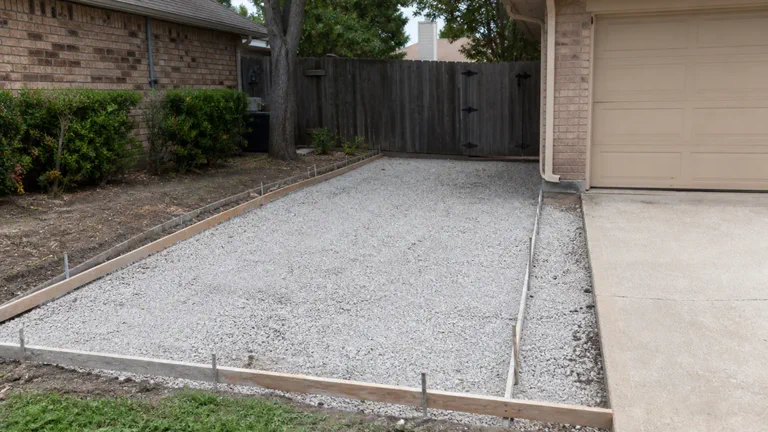
The plan should consider base compaction, slab thickness, reinforcement where appropriate, joint layout, drainage, and edge support. Soil movement and standing water can be just as important as the vehicle weight itself.
What should I measure first?
Measure the vehicle, the turning path, the gate opening, available width, distance from the property line, and the route from street to pad. Note sprinkler heads, utility boxes, trees, drainage, and any HOA or city restrictions.
Start with the project
Map Out the Storage Pad
Use the form to describe the property, city, approximate size, and what you want the finished concrete to solve. A conversation can then focus on useful next steps instead of starting from scratch.