
Driveway additions and replacement sections
Concrete Driveway Additions in DFW
A concrete driveway addition is usually part repair, part layout decision. The new slab may need to widen a tight approach, replace a cracked apron, extend parking near the garage, or connect two surfaces that were poured years apart.
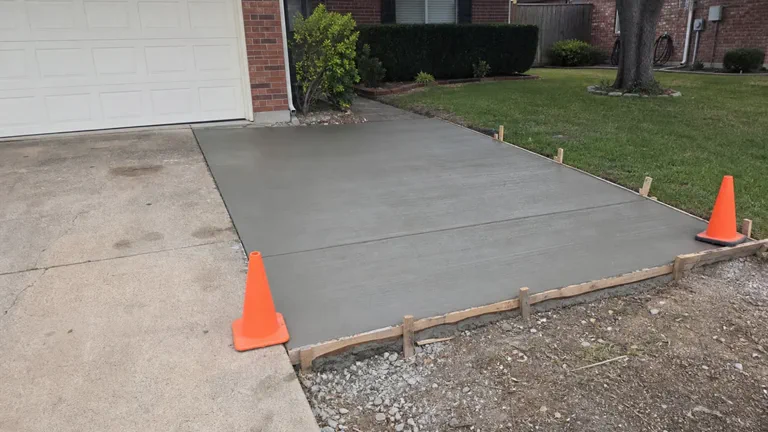
What changes when new concrete meets old concrete
Older DFW driveways often show settlement, surface scaling, or cracks that reveal how the base has been moving. Adding new concrete beside that slab can still make sense, but the joint should be planned honestly so the transition is clean and expectations are realistic.
A driveway addition near the curb or garage has different constraints than a side-yard parking strip. The curb approach may involve city rules, the garage end may need careful slope, and replacement sections may require demolition and haul-off before the new work can be formed.
Before anyone talks about a finished surface, the project needs a read on base condition, thickness, water movement, and traffic. A pickup, delivery van, boat trailer, or RV creates different demands than occasional guest parking.
- Identify cracked or settled sections that could affect the new tie-in.
- Separate widening work from true replacement work so scope stays clear.
- Discuss broom finish, joint spacing, and edge shape before the pour is scheduled.
- Flag curb, alley, or garage-slope constraints early.
Concrete planning standard
Driveway concrete with honest tie-ins
Driveway concrete should be scoped around the condition of the old slab, not only the new square footage.
Replacement areas, tie-ins, base condition, broom finish, and traffic load should be clear before work is treated as a simple addition.
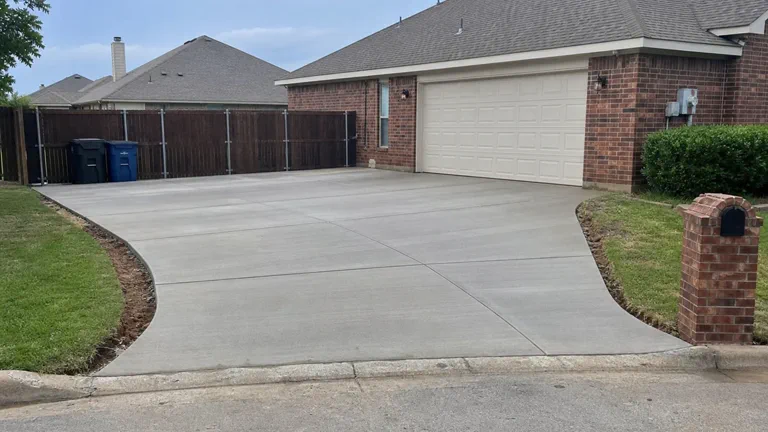
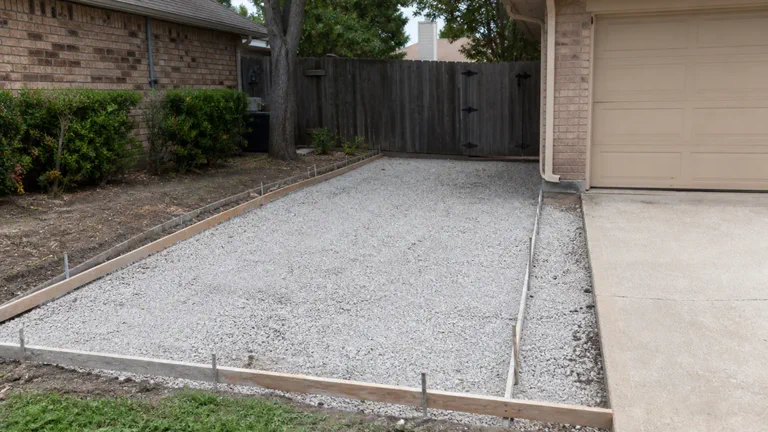
Concrete driveway questions
Can new concrete meet an older driveway?
Often yes, but the joint and expectations should be clear. Older concrete may have color differences, cracks, or settlement that affect how the new work looks beside it. The tie-in should consider thickness, control joints, slope, and whether the old slab is stable enough to remain.
When is replacement part of the scope?
Replacement enters the conversation when the existing section is cracked, sunken, too thin, holding water, or in the way of a clean addition. Sometimes replacing a short transition panel gives the finished driveway a better shape than trying to attach new concrete to a failing edge.
How long before a new driveway section can handle vehicles?
Light foot traffic is often possible before vehicle traffic, but cars, trucks, trailers, and RVs should wait longer. The safe timeline depends on the mix, thickness, weather, and load. Heavy vehicles need a more cautious curing window than a small passenger car.
How do you reduce cracking in a new driveway addition?
Good cracking control starts before the pour: compacted base, appropriate thickness, planned joints, reinforcement where it fits the scope, and drainage that does not leave the slab sitting in water. Concrete can still develop hairline cracks, but planning reduces the avoidable ones.
What maintenance helps a concrete driveway last longer?
Keep the edges supported, rinse off staining materials, avoid letting irrigation or downspouts wash out the base, and watch for soil settling along the sides. If a sealer is recommended for the finish, follow the recommended timing and product instructions rather than sealing too early.
What driveway details matter most for pricing and planning?
Traffic load, base condition, slope, curb or garage tie-in, demolition, haul-off, drainage, reinforcement, finish, and access all affect the scope. Photos and rough dimensions help narrow the conversation quickly.
Start with the project
Review Driveway Concrete
Use the form to describe the property, city, approximate size, and what you want the finished concrete to solve. A conversation can then focus on useful next steps instead of starting from scratch.